

State of Healthcare Affordability: The Provider Perspective
PATIENT AS THE PAYER REQUIRES A NEW BLUEPRINT
Based on a survey conducted in partnership with HFMA, 205 revenue cycle leaders from leading health systems share insights on shifting priorities, performance metrics, and how AI is reshaping the future of the revenue cycle.


What You’ll Learn in the Report
 Patient revenue benchmarks from health systems nationwide
 How leading systems are shifting toward earlier financial engagement
 Where AI is transforming the revenue cycle—and where it’s not
KEY FINDING
Improving the Patient Financial Experience Is Now a Top Priority
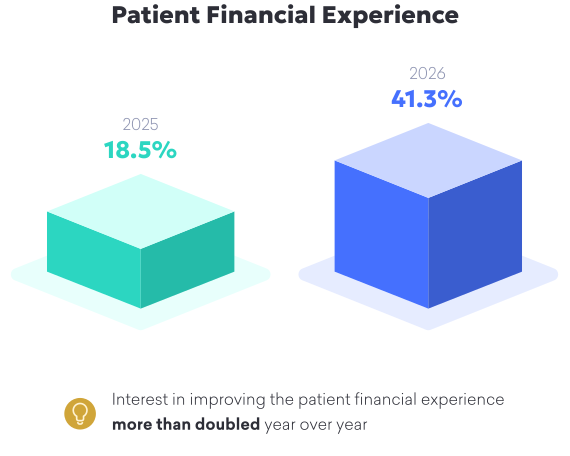
In just one year, the share of health systems prioritizing improvements to the patient financial experience more than doubled. This shift reflects a growing recognition that patient experience is no longer separate from financial performance. As patients shoulder a greater share of care costs, friction in the financial journey directly affects collections, access to care, and overall system efficiency.

KEY FINDING
More than one in three health systems use AI in the revenue cycle.
How Does Your Revenue Cycle Compare?
This report provides a clear view into the key KPIs shaping today’s revenue cycle, from patient collections and payment plan performance to pre-service engagement.
Understanding how your health system’s performance compares is key to identifying gaps and unlocking opportunities for improvement.

Frequently Asked Questions
Providers can improve patient financing by engaging patients earlier in the financial journey, offering AI-driven, personalized payment plans based on ability to pay, and using automation to reduce administrative burden across the revenue cycle. PayZen’s 2026 Provider Perspective survey found that more than one in three health systems now use AI in the revenue cycle to support these shifts.
Hospitals can offer interest-free payment plans without added financial risk by using a non-recourse financing model, where a third-party platform like PayZen assumes the repayment risk and pays the provider upfront, regardless of whether the patient completes the plan.
The 2026 report found that improving the patient financial experience has become a top strategic priority for revenue leaders, with interest in this area more than doubling year over year, rising from 19% of health systems in 2025 to 41% in 2026. This places it nearly on par with reducing bad debt as a core focus.
According to the 2026 survey, 57% of hospitals cap in-house payment plans at two years or less, which is often insufficient for larger medical bills. More significantly, 72% of organizations do not know their default rates for in-house payment plans, pointing to a major visibility gap in how payment plan performance is tracked and managed.
On average, health systems collect just 31% of patient billings, according to PayZen’s 2026 Provider Perspective report. Nearly a quarter of what is collected is tied up in active payment plans, extending time to resolution and limiting cash flow even as providers work to offer patients more flexibility.
Read The Full Report
Explore patient behavior insights, real system benchmarks, and recommendations for building a more sustainable, patient-first revenue cycle.