

Many in-house payment plans were built for a different era of patient affordability.
PayZen’s State of Healthcare Affordability: The Patient Perspective 2025 found that the average patient can afford only $82 per month toward medical bills. The Provider Perspective 2026 found that nearly 6 in 10 hospitals cap in-house payment plans at 24 months or less, making it prohibitive to pay off large medical bills. Together, those findings expose a structural gap between what patients can afford and what many health systems offer.
When in-house terms are too short to be affordable, a payment plan can create a false sense of progress while cash remains delayed, servicing costs continue, and default risk stays difficult to measure.
A False Sense of Affordability
For many health systems, in-house payment plans have long served as the default answer to patient affordability. When a patient cannot pay a full balance upfront, the organization offers a payment plan. The balance is divided into monthly installments. The account remains in-house. The patient has a path forward.
For some patients, that model works.
But as patient balances grow, short-term in-house payment plans can create a false sense of affordability. A plan may make the bill look more manageable on paper, but if the monthly payment is still too high for the patient to sustain, the balance remains at risk.
That distinction matters. Enrollment may move the account into a repayment workflow, but it does not guarantee resolution.
The Provider Perspective 2026 found that health systems collect just 31% of total patient billings, while 23% of patient payments are made via payment plan.
In other words, payment plans are already a meaningful part of the patient payment ecosystem, but patient collections remain highly constrained.
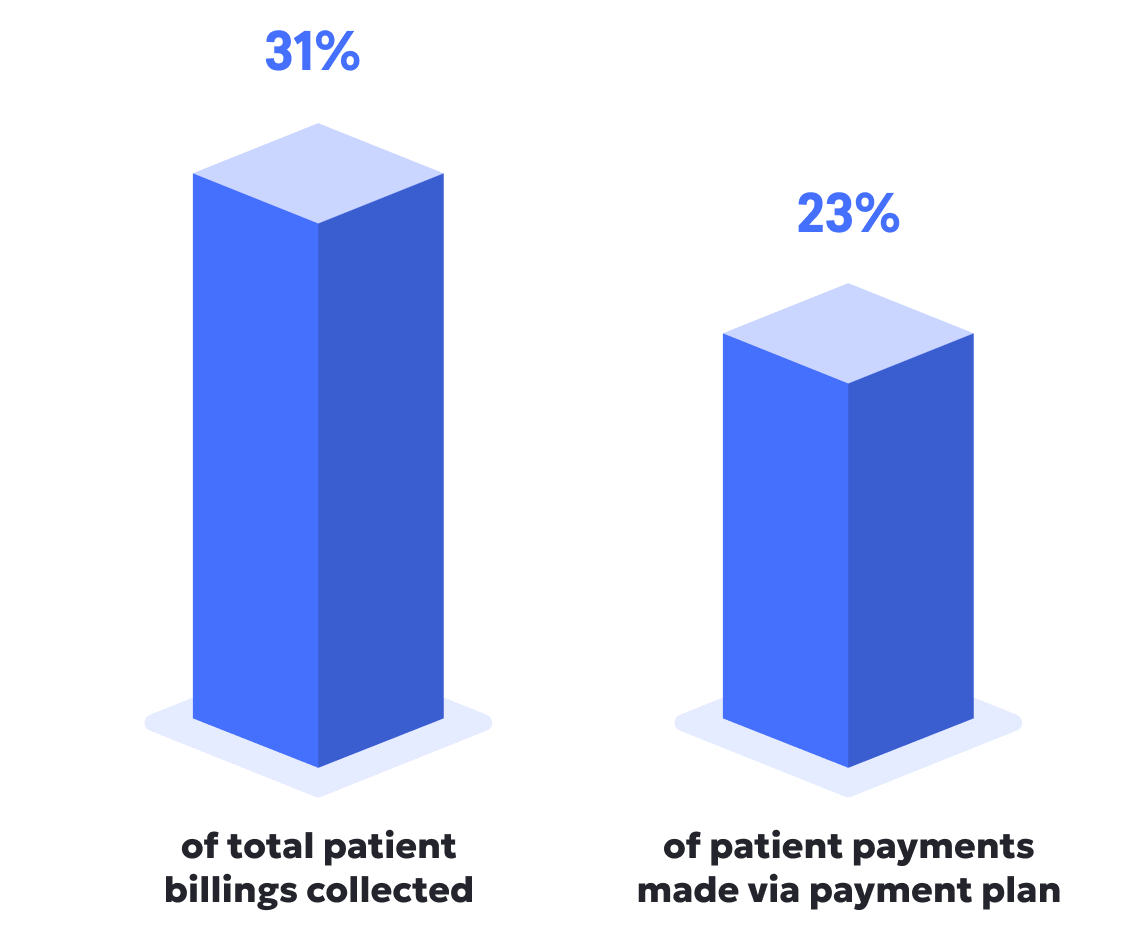
That should prompt a more pointed question for revenue cycle leaders: are our in-house payment plans helping patients resolve balances, or are they simply keeping more balances active for longer?
The answer depends on whether the plan is affordable enough to perform.
Default Risk Is Built Into the Terms
The healthcare financial landscape has changed dramatically. Patient responsibility is no longer limited to predictable copays or modest out-of-pocket expenses. The Provider Perspective 2026 found that patient billings now account for 12% of total net patient revenue, making patient payments a meaningful and increasingly important component of health system financial performance.
At the same time, insurance benefit design is pushing more cost exposure onto patients. In 2025, 33% of covered workers were enrolled in a high-deductible health plan. KFF also found that more ACA Marketplace enrollees selected lower-premium, higher-deductible bronze plans in 2026, with bronze plan selections rising from 30% to 40% of total Marketplace enrollment. As a result, the average ACA Marketplace deductible increased by more than $1,000 per person in 2026.
For providers, the implication is clear: even insured patients, who have traditionally had a higher propensity to pay, are facing greater out-of-pocket responsibility. That changes the math of patient collections. As balances grow, short-term repayment terms become harder for patients to sustain and less reliable for providers trying to resolve receivables.
The Provider Perspective 2026 found that nearly 6 in 10 hospitals cap in-house payment plans at 24 months or less, and fewer than 16% offer terms longer than 36 months. When those limits are compared against what patients can realistically afford, the mismatch becomes clear.
At $82 per month, a $5,000 balance takes more than five years to repay. Under a 24-month in-house plan, that same balance requires a monthly payment of more than $200.
For many patients, that difference determines whether the plan is sustainable from the start.

When Short-Term Plans Are Unaffordable, Cash Stays Delayed
Unrealistic terms do not just create patient friction. They delay cash, keep receivables open, and make collectability harder to predict.
When a patient financing is misaligned with a patient’s ability to pay, the account may remain active without being on a reliable path to resolution. The health system continues to manage reminders, missed payments, exceptions, and follow-up while the balance remains open.
That is where the silent revenue leak begins.
The Default Blind Spot Makes the Leak Harder to See
The challenge becomes even more significant when health systems lack visibility into how their in-house payment plans are performing.
The Provider Perspective 2026 found that 72.2% of organizations do not know their average default rate for in-house payment plans longer than 12 months. Among organizations that did report a figure, the average self-reported default rate was 13.3%. However, when PayZen conducts direct evaluations of in-house program performance, the average default rate rises to 20% for patient payment plans longer than 12 months.
That gap matters. If leaders do not know how often in-house payment plans fail, they cannot accurately assess whether those plans are resolving balances, improving collections, or simply delaying bad debt. Underperformance can hide inside the payment plan portfolio, especially when enrollment is treated as a success metric.
Without visibility into completion rates, defaults, cash timing, and servicing effort, “good enough” in-house plans can continue operating as usual, even when they are quietly leaking revenue.
Affordability Is the Performance Strategy
The next generation of patient financing solutions will not be defined by whether a health system offers an in-house payment plan. Most already do. The Provider Perspective 2026 found that only 8% of surveyed health systems do not offer an in-house plan, meaning the next phase of strategy is not simply offering a plan; it is improving how those plans perform.
At the same time, adoption of third-party patient financing services is rising. The report found that 43.8% of health systems now work with a third-party, patient financing vendor, up from approximately 38% the year prior. That shift suggests more organizations are recognizing the need for scalable, affordability-driven models that can better align patient payment options with provider financial performance.
That requires health systems to evaluate patient financing solutions through a more complete lens:
- Can patients afford the monthly payment?
- Are patients successfully completing the plan?
- Are patient financing solutions reducing bad debt or delaying it?
- How much cash remains tied up in active plans?
- How much effort is required to service those accounts?
- Are patients being offered a realistic path to resolution?

These questions matter because patient financing for patients is no longer a narrow collections workflow. It is part of the broader financial infrastructure that health systems need to manage rising patient responsibility.
A more sustainable patient financing solutions starts with designing repayment around affordability. That means using data to understand what patients can realistically pay, offering options that match individual financial capacity, and measuring whether those patient financing plans actually resolve balances over time. Done well, payment plans can support both sides of the equation, giving patients a realistic way to manage medical bills while helping providers improve collections, reduce bad debt, accelerate cash flow, and reduce administrative burden.
PayZen helps health systems make that shift with AI-powered patient financing solutions that personalizes payment options based on each patient’s ability to pay. The result is a more sustainable approach to financing for patients, one designed to improve collections, reduce default risk, and create more predictable financial performance.
In today’s healthcare environment, “good enough” in-house payment plans may be costing health systems more than they realize.